Custom Vacuum Casting Parts | Rapid Prototyping & Low-Volume Manufacturing Product Overview
At JYH CNC Precision Machining Company, we provide custom vacuum casting parts for product development, functional testing, appearance models, and low-volume production. Vacuum casting is a versatile manufacturing process that uses silicone molds and vacuum-assisted casting to reproduce detailed plastic components from a master pattern.
This process is particularly suitable for projects that require high-quality surface appearance, fine details, consistent part reproduction, and lower initial tooling costs than conventional injection molding.
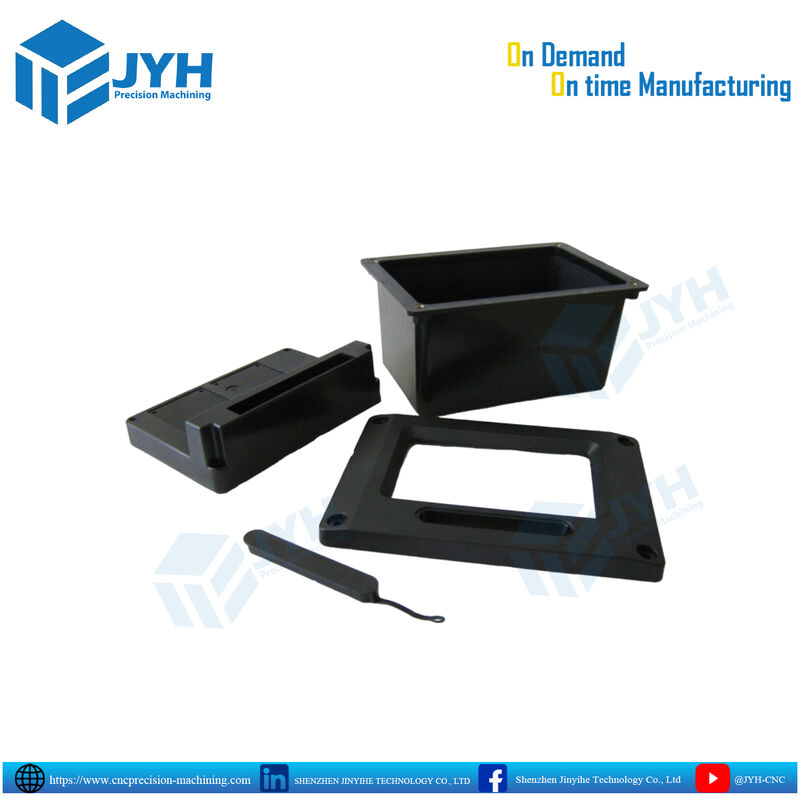
Vacuum casting is widely used to produce prototype housings, electronic enclosures, product covers, transparent components, and customized plastic parts before committing to mass-production tooling.
From master pattern preparation to silicone mold production, casting, finishing, and inspection, we provide customized manufacturing solutions based on your drawings, CAD models, and sample requirements.
How Vacuum Casting Works
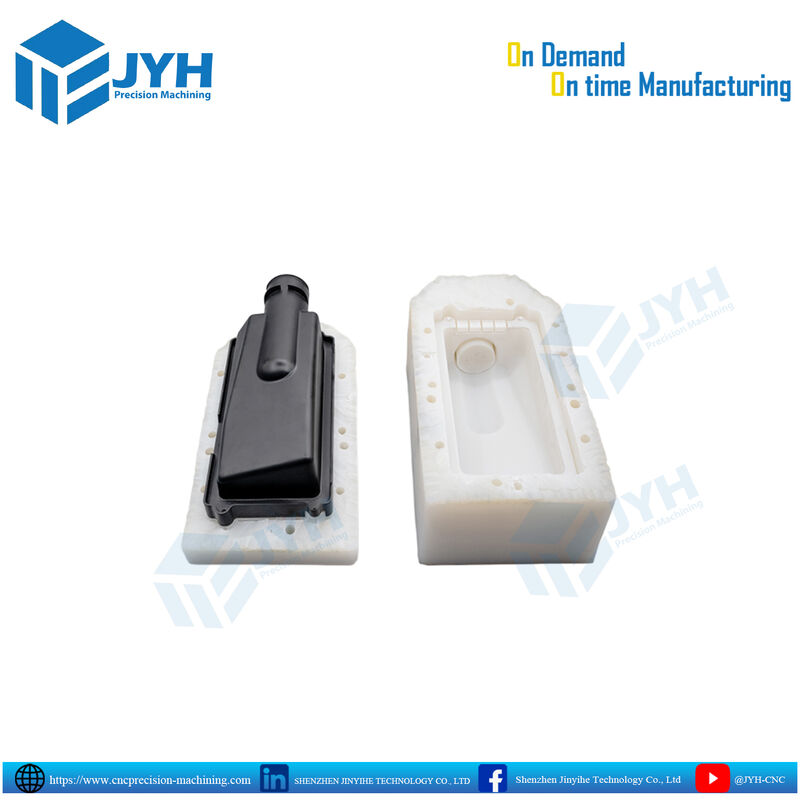
Vacuum casting uses a master pattern to create a silicone mold. Liquid casting resin is then introduced into the mold under vacuum conditions to help reduce trapped air and reproduce fine features.
1. Master Pattern Preparation
A master pattern is manufactured using 3D printing or another suitable process. Its dimensions and surface quality determine the appearance of the final cast parts.
2. Silicone Mold Making
Liquid silicone is poured around the master pattern and cured to create a flexible mold that captures the component's geometry and fine details.
3. Vacuum Casting
Selected casting resin is mixed and poured into the silicone mold under vacuum. The material is then cured according to the resin manufacturer's process requirements.
4. Finishing & Inspection
The cast parts are demolded, trimmed, cleaned, and finished as required before dimensional and visual inspection.
Materials for Vacuum Casting
Vacuum casting commonly uses polyurethane (PU) casting resins formulated to simulate the properties and appearance of production plastics.
Material selection depends on the component's mechanical requirements, color, transparency, flexibility, and operating environment.
|
Material Type
|
Typical Characteristics
|
Common Applications
|
|
ABS-like resin
|
Good balance of toughness and rigidity
|
Housings, covers, enclosures
|
|
PC-like resin
|
High impact resistance and suitable transparency options
|
Transparent covers, protective components
|
|
PP-like resin
|
Flexible formulations and good impact performance
|
Clips, housings, functional prototypes
|
|
PMMA-like resin
|
Available in transparent formulations with good optical appearance
|
Light covers, display components
|
|
Flexible PU resin
|
Rubber-like flexibility in selected formulations
|
Flexible covers, seals, soft-touch prototypes
|
|
High-temperature PU resin
|
Improved thermal performance compared with standard casting resins
|
Functional testing and selected engineering applications
|
These are resin property categories rather than exact material equivalencies. Vacuum-cast resins may not match the performance, certification, or long-term durability of the corresponding injection-molded thermoplastics. Please confirm the specific resin grade and its technical data before production.
Key Advantages of Vacuum Casting Parts 1. Lower Initial Tooling Investment
Vacuum casting uses silicone molds rather than conventional hardened-steel injection molds. This can significantly reduce initial tooling investment for prototypes and limited production runs.
2. Excellent Surface Appearance
The silicone mold reproduces the master pattern's surface details, making vacuum casting suitable for appearance models, product demonstrations, and customer evaluation samples.
3. Fine Detail Reproduction
The process can reproduce small features, textured surfaces, and complex geometries when the master pattern and mold design are suitable.
4. Flexible Material and Color Options
Different polyurethane resin formulations can provide rigid, flexible, opaque, or transparent parts. Custom colors and selected surface finishes can be applied according to project requirements.
5. Suitable for Low-Volume Production
Vacuum casting is an effective option for producing multiple parts without investing in expensive production tooling. It is commonly used for prototype batches and pre-production evaluation.
6. Faster Product Development
Compared with manufacturing a conventional injection mold, silicone mold production generally requires less initial tooling work. This can help accelerate product development and design verification.
Typical Vacuum Casting Parts
We manufacture customized vacuum-cast components for a wide range of applications, including:
- Plastic housings and enclosures
- Electronic device covers
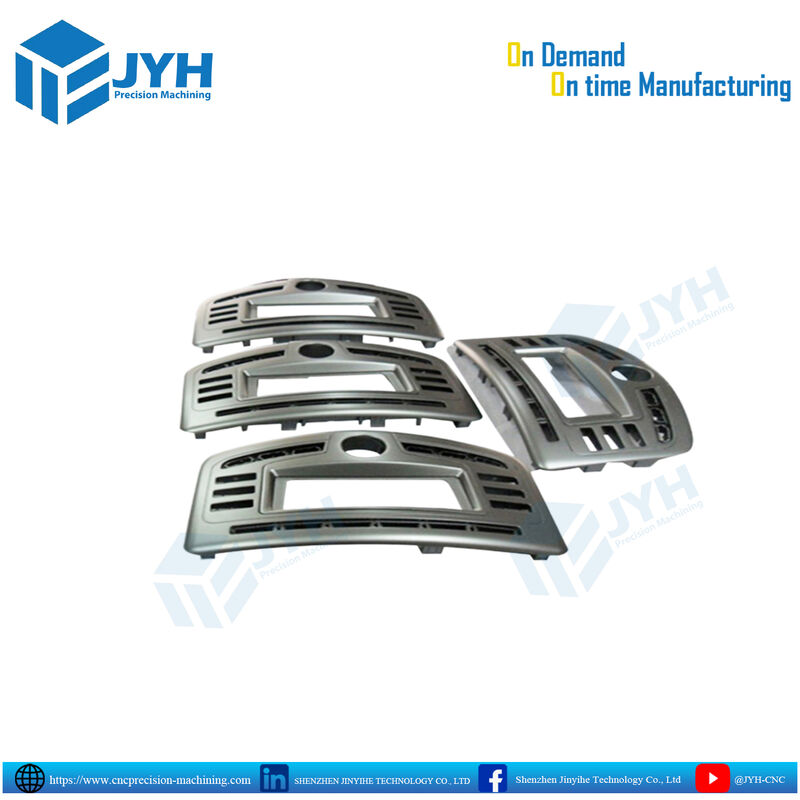
- Product appearance models
- Control panel components
- Transparent plastic covers
- Prototype brackets and supports
- Buttons and knobs
- Consumer product prototypes
- Functional testing components
- Customized plastic components
Complex parts may require careful mold design, suitable parting lines, and appropriate wall thickness to ensure successful casting.
Surface Finishing Options
Vacuum-cast parts can receive additional finishing to achieve the required appearance and functionality.
Available options may include:
- Color matching
- Spray painting
- Glossy or matte finishes
- Textured surfaces
- Sanding and polishing
- Transparent or translucent finishes
- Laser marking, where suitable
- Custom cosmetic finishing
Surface quality depends on the master pattern, silicone mold condition, resin selection, and post-processing requirements.
Vacuum Casting vs. Injection Molding
Both processes are useful for plastic component production, but they serve different manufacturing needs.
|
Comparison
|
Vacuum Casting
|
Injection Molding
|
|
Initial Tooling Cost
|
Generally lower
|
Generally higher
|
|
Tooling Type
|
Silicone mold
|
Production mold, often metal
|
|
Typical Production Volume
|
Prototypes and low-volume batches
|
Medium- to high-volume production
|
|
Material Options
|
Primarily polyurethane casting resins
|
Broad range of production thermoplastics
|
|
Surface Appearance
|
Excellent when the master pattern is well prepared
|
Depends on mold finish and molding conditions
|
|
Repeatability
|
Mold life and resin process affect consistency
|
Suitable for highly repeatable production
|
|
Best Use
|
Design validation and limited batches
|
Long-term, larger-volume manufacturing
|
Which process should you choose? Vacuum casting is often suitable when you need a small quantity of parts with good appearance and relatively low tooling investment. Injection molding is generally more economical for sustained, high-volume production.
Applications Across Industries
Vacuum casting parts are widely used in:
- Electronics and electrical equipment
- Consumer products
- Industrial automation
- Robotics
- Automotive development
- Medical device development
- Telecommunications
- Laboratory equipment
- Product design and engineering
- Mechanical prototype development
The suitability of a specific resin depends on the intended use. Applications requiring food-contact compliance, medical approval, flame-retardancy certification, or long-term outdoor exposure need special material verification.
Quality Control
At JYH, vacuum-cast components can be inspected according to customer drawings, appearance standards, and technical specifications.
Quality checks may include:
- Overall dimensions
- Critical hole positions and diameters
- Wall thickness where accessible
- Surface appearance
- Color consistency
- Flash and parting-line condition
- Fit and assembly verification
- Functional checks for prototype applications
Dimensional inspection reports and other quality documentation can be provided according to project requirements.
Why Choose JYH for Vacuum Casting Parts?
JYH provides customized manufacturing support for customers developing new products or sourcing low-volume plastic components.
Our manufacturing capabilities include:
- Vacuum casting
- CNC machining
- 3D printing
- Plastic injection molding
- Sheet metal fabrication
- Metal parts manufacturing
- Surface finishing
- Mechanical assembly
- Dimensional inspection
By combining different manufacturing processes, we can support projects that require vacuum-cast plastic components alongside CNC-machined metal parts or other custom components.
Our team can review your design, recommend a suitable manufacturing process, and help you move from prototype development toward production.
Request a Quote for Custom Vacuum Casting Parts
Looking for a supplier for custom vacuum-cast plastic components?
Please send us your 2D drawings, 3D CAD files, required quantity, resin properties, color, surface finish, and critical tolerances. If you have a physical sample or appearance reference, you can also share it for evaluation.
Our team will review your requirements and provide a suitable quotation for your vacuum casting project.


 Your message must be between 20-3,000 characters!