Custom Low-Volume Vacuum Casting with Silicone Mold Surface Detail and Multiple Polyurethane Resin Options for Vacuum Cast Plastic Components
Custom Low-Volume Vacuum Casting with Silicone Mold Surface Detail and Multiple Polyurethane Resin Options for Vacuum Cast Plastic Components
Custom Low-Volume Vacuum Casting
Silicone Mold Surface Detail Casting
Polyurethane Resin Vacuum Casting
Place of Origin:
China
Brand Name:
JYH
Certification:
ISO 9001, IATF 16949-2016
Model Number:
Full OEM / ODM Support
Contact Us
Request A Quote
Product Details
Highlight:
Custom Low-Volume Vacuum Casting
,
Silicone Mold Surface Detail Casting
,
Polyurethane Resin Vacuum Casting
Payment & Shipping Terms
Minimum Order Quantity
1
Price
Competitive
Packaging Details
Custom packaging
Delivery Time
3-5 days
Payment Terms
30 Days net
RELATED PRODUCTS
Contact Us
Sandy Xu
Contact Now
Product Description
Product Overview
Vacuum casting is an effective manufacturing solution for producing detailed plastic components without the high initial investment required for conventional injection molding. At JYH CNC Precision Machining Company, we provide custom vacuum cast parts for product development, design verification, functional evaluation, and small-batch manufacturing.
This process is especially useful when a product design is nearly finalized but requires physical samples for assembly checks, customer demonstrations, market evaluation, or pre-production testing. Using a master model and a silicone mold, we can reproduce complex component geometries with good surface detail and a range of material appearances.
Our vacuum casting service supports customized shapes, colors, textures, and finishing requirements according to your technical drawings, 3D CAD models, and sample specifications.
Why Choose Vacuum Casting?
Cost-Effective Small-Batch Production
Vacuum casting uses silicone molds that are generally less expensive and faster to produce than conventional metal injection molds. It is particularly suitable for prototype batches and limited production quantities.
High-Quality Surface Reproduction
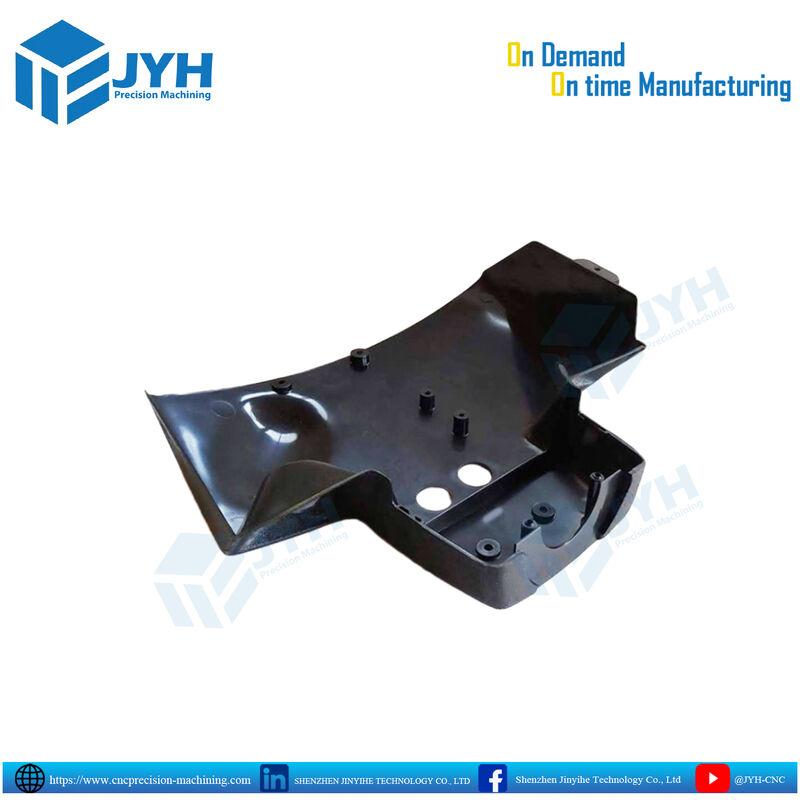
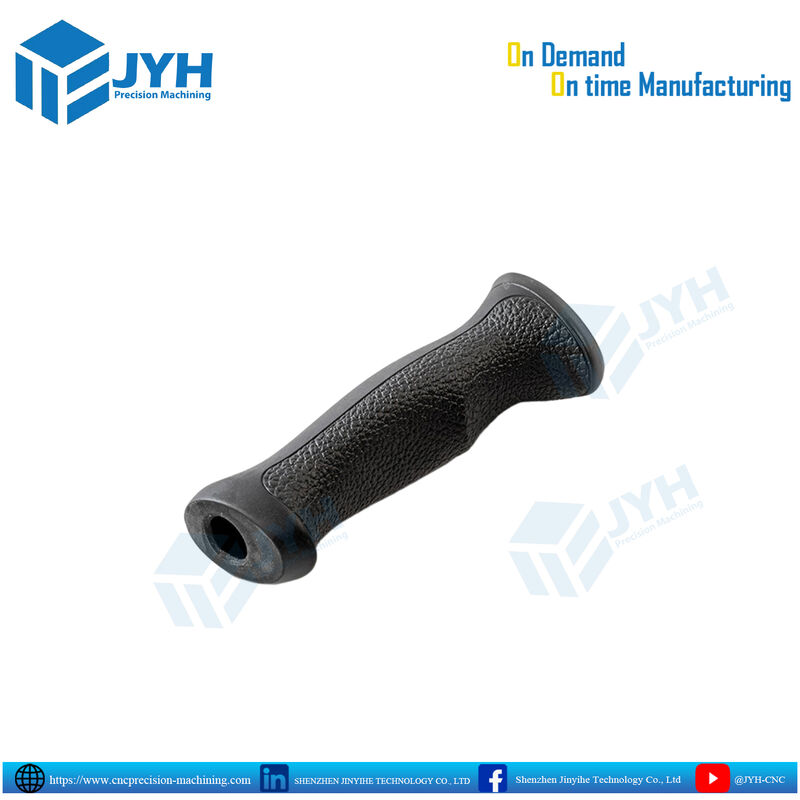
The silicone mold can reproduce fine details and surface textures from the master model. This makes vacuum casting suitable for cosmetic prototypes, product housings, covers, and presentation samples.
Flexible Design Options
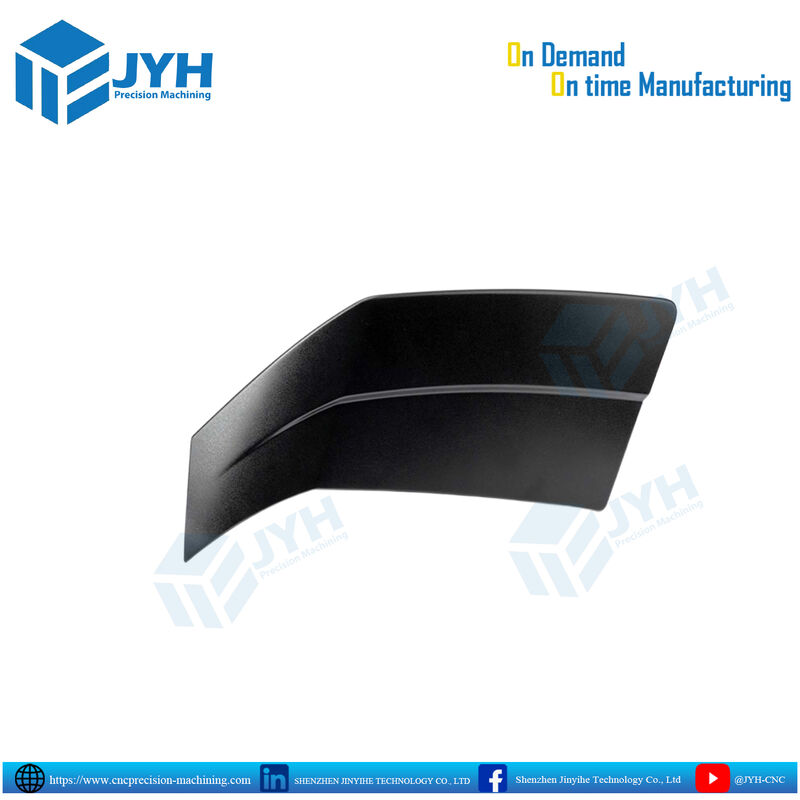
Vacuum casting supports various component shapes, including curved housings, detailed enclosures, recessed features, and selected complex geometries. Mold design and part geometry determine which features can be reproduced successfully.
Multiple Material Characteristics
Different polyurethane casting resins can simulate selected properties of common plastics, including rigidity, flexibility, impact resistance, and transparency. The appropriate resin depends on the intended application.
Ideal for Product Validation
Physical vacuum-cast samples allow engineers to evaluate product appearance, component fit, assembly procedures, and selected functional characteristics before committing to production tooling.
Vacuum Casting Manufacturing Process
1. Master Model Production
A master model is prepared using 3D printing, CNC machining, or another suitable process. Its dimensional accuracy and surface finish influence the final casting quality.
How to make a plastic prototype — master model preparation
2. Silicone Mold Preparation
Silicone is formed around the master model and cured. The master is then removed, leaving a mold cavity that reproduces the part geometry.
Silicone mold preparation for vacuum casting
3. Resin Casting
The selected resin is prepared and introduced into the mold under vacuum conditions to help minimize air entrapment and reproduce fine features.
Rapid prototyping services — SECCI concept design
4. Demolding & Post-Processing
After curing, the parts are removed from the mold, trimmed, cleaned, and finished according to the project requirements.
Axson UP 6160 vacuum casting services — tough ABS-like parts
Available Casting Material Options
Vacuum casting typically uses polyurethane resins selected to achieve particular physical and visual characteristics.
Material Category
Typical Properties
Suitable Applications
ABS-like resin
Rigid, versatile, good general-purpose performance
Product housings, covers, enclosures
PC-like resin
Impact-resistant formulations; transparent grades may be available
Protective covers, transparent prototypes
PP-like resin
Available in tough and flexible formulations
Functional prototypes, selected clips and housings
PMMA-like resin
Transparent grades with good visual clarity
Display components, light covers
Flexible polyurethane
Elasticity and rubber-like behavior, depending on grade
Flexible covers, cushioning components
High-temperature resin
Enhanced heat resistance compared with standard casting resins
Selected functional testing applications
These resins simulate certain characteristics of engineering plastics but are not necessarily identical to the corresponding injection-molding materials. Confirm the specific resin's technical data, temperature limits, and chemical compatibility before selecting it for functional use.
Customization Options
We manufacture vacuum-cast parts according to individual project requirements.
Geometry and Dimensions
Customized 3D shapes
Housings and covers
Recessed features and cutouts
Mounting features
Prototype assemblies
Appearance
Custom colors
Matte or glossy finishes
Textured surfaces
Transparent or translucent options, where suitable
Painted surfaces
Trimming and finishing
Secondary Operations
CNC machining of selected features
Drilling and tapping, where feasible
Bonding of multiple components
Assembly with metal or plastic parts
Dimensional inspection
Vacuum Casting Compared with Other Manufacturing Processes
Vacuum casting is not a replacement for every plastic manufacturing process. Its main advantage is the ability to produce relatively small quantities without investing in a conventional production mold.
Manufacturing Process
Best Suited For
Main Consideration
Vacuum Casting
Prototypes and low-volume batches
Silicone molds have a limited service life
Injection Molding
Medium- to high-volume production
Higher initial mold investment
CNC Plastic Machining
Precision parts made from solid plastic stock
Material waste and geometry may affect cost
3D Printing
Rapid design iterations and complex shapes
Surface finish and material properties vary by process
Selecting the right process depends on order quantity, component geometry, material requirements, dimensional tolerances, and surface appearance.
Typical Applications
Our custom vacuum casting services can support projects in:
Consumer electronics
Industrial equipment
Robotics and automation
Automotive product development
Medical device prototyping
Telecommunications equipment
Electrical enclosures
Laboratory instruments
Consumer product design
Mechanical assembly development
Vacuum casting is particularly useful for products that require realistic appearance models or functional samples before mass production.
Quality Inspection & Assembly Verification
Vacuum-cast components can be inspected according to the customer's drawings and acceptance criteria. Depending on the project, inspection may cover:
Overall dimensions
Critical hole positions
Wall thickness, where accessible
Surface defects
Color and appearance
Flash and parting-line condition
Fit with mating components
Assembly functionality
For assemblies containing both metal and plastic parts, we can coordinate component production and assembly checks according to the supplied drawings and requirements.
From Prototype to Production
Vacuum casting provides a practical bridge between early-stage product development and large-scale manufacturing.
Design Verification: Evaluate geometry, appearance, and component fit.
Functional Prototypes: Check selected mechanical functions using an appropriate casting resin.
Customer Samples: Prepare presentation models for review and approval.
Pre-Production Batches: Produce limited quantities before investing in injection tooling.
Low-Volume Supply: Manufacture small batches when conventional injection molding is not economically suitable.
For larger recurring quantities, we can also evaluate whether injection molding would provide a more economical long-term solution.
Why Work with JYH?
JYH offers multiple manufacturing technologies to support custom component development, including vacuum casting, CNC machining, 3D printing, injection molding, sheet metal fabrication, and mechanical assembly.
This combination allows us to evaluate different production approaches according to your design and order requirements. We can support projects that involve vacuum-cast plastic housings together with machined metal brackets, inserts, fasteners, and other mechanical components.
Our focus is to provide a suitable manufacturing solution based on your required quality, appearance, quantity, and delivery schedule.
Request a Vacuum Casting Quote
Have a plastic prototype or low-volume manufacturing project? Please provide the following information for quotation:
2D technical drawing or 3D CAD file
Required quantity
Material properties or preferred resin
Color and surface finish
Critical dimensions and tolerances
Assembly requirements
Intended application
Our team will review your specifications and recommend a suitable approach for manufacturing your custom vacuum casting parts.


 Your message must be between 20-3,000 characters!